Woodcutting
 Herbalism
 Waterhandling
 Mining
Spartan Comments on self
It is entirely seemly for a young man killed in battle to lie mangled by the bronze spear. In his death all things appear fair.
– Homer, The Iliad
Until you realize that the Enemy is stronger and smarter than you, you will never be able to defeat him... with Faith! -- Me :)
Spartiatis prepares his shield with his spear and hits three times, AHU! AHU! AHU!
...none shall pass trough the hot gates of Loreroot!
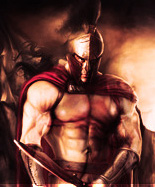
"The giant wolf sniffing.
Savoring the flavor of the meal that lies to come.
Roar!
Savoring the flavor of the meal that lies to come.
Roar!
...
The young spartiatis sneaks between the crevice of the mountain, trapping himself in front of the beast.
The Wolf prepares its deadly attack on the apparent easy prey.
But spartiatis positioned his spear on the floor, hitting the chest of the wolf, that howls in pain.
The Wolf prepares its deadly attack on the apparent easy prey.
But spartiatis positioned his spear on the floor, hitting the chest of the wolf, that howls in pain.
...
There was no fear that gripped him.
Only an expanded notion of things.
...
Only an expanded notion of things.
...
His hands are steady.
His position is perfect, then with a sharp blow, hitting the mouth of the wolf fatally.
That releases his latest groan of pain.
His position is perfect, then with a sharp blow, hitting the mouth of the wolf fatally.
That releases his latest groan of pain.
...
Then the boy, now presumed dead, returns to his people ...
To the holy Sparta as a man.
Dressed in the skin of the wolf, to withstand the harsh winter.
It is no longer a boy, but a true Spartiaths."
To the holy Sparta as a man.
Dressed in the skin of the wolf, to withstand the harsh winter.
It is no longer a boy, but a true Spartiaths."
...
One day Persian emissaries were sent to Sparta.
Loading skulls and crowns of kings conquered by Xerxes.
King Leonidas warned:
"Before you speak Persian, know that in Sparta, everyone, even the messenger of a
king, is considered responsible for what he says. "
...
"Earth and water!"
...
Realizing that the payment of taxes would deliver his people to
slavery, replied:
"Submission, that's a little problem!"
...
Now is the Persian messenger to alert the Spartan king:
"Choose your next words as well as they could be your last."
Leonidas draws his sword trapping the envoys next to a well,
while desperate claim to be madness!
"Madness?"
"THIS IS SPARTA!"
...
When a Spartiaths was preparing for war his wife handed him his
shield and said:
"Come back with your shield or on it!"
Because the shield was not a personal defense equipment, in
phalanx formation, shield protects the thigh to the neck of the soldier, but half
left, right mate protects the other half right.
The helmet, armor and leg greaves, were items of self defense, and
considered of lesser importance tactics.
In Sparta no place for the weak, only the hard, only the strong.
... We marched for our lands, for our families
for our freedom. We march.
Until we find the Photios, who are surprised by the small group of
Spartiaths, while led two thousand men, so Leonidas asks:
"You, There. What is your profession?"
"I am a potter, sir."
"You, arcade, what is your profession?"
"Sculptor , sir."
...
"Spartiaths! What is your profession?"
"AHU! AHU! AHU!
...
"Immortals? We Will Put Their Name To The Test!"
Into the Hot Gates we march.
Where the numbers of Xerxes will be worth nothing!
Into the hell mouth, we march!
...
Another emissary is sent to us;
While rebuiding the wall, with his arrogant speech ended up losing his hand ...
"You Will pay for your barbarism!"
"The thousand nations of the Persian empire will decend upon you!
Our arrows will block the sun!" ...
"So we'll fight in the shadows!"
...
"My father trained me to feel no fear.
To the spear, sword and shield be a part of me! "
...
When an earthquake suddenly takes over the battlefield.
"Earthquake?"
"No capitan! Battle formations ."...
...
"Here is where to keep them!
Here is where we fight!
Here is where they die!
Raise the shields, boys!
AHU!
Remember that day, men.
Because will be yours forever! "
...
"Spartiaths! Hand over your weapons!"
(Silence)
A spear sails through the air,
Finding the heart of the enemy captain.
"Persians! Come Catch them!"
...
"HOLD!
Do not give them nothing!
But take them everything!
STAY!"
charge-the clash of shields and spears ...
PUSH!
"Maintain the formation!"
PUSH!
NOW!-Thrust and strike ...
NOW!-Shields and spears ...
"Let no one alive!
AHU!
No mercy!
AHU!"
...
slow motion fight ...
Epic spear throw ...
Rise sword ...
"Seem to be thirsty?
Well, we'll give you something to drink!
For the cliff!"
...
When Spartan men went to war, their wives (or another women of some significance) would customarily present them with their shield and say: "With this, or upon this" (Ἢ τὰν ἢ ἐπὶ τᾶς, Èi tàn èi èpì tàs), meaning that true Spartans could only return to Sparta either victorious (with their shield in hand) or dead (carried upon it). If a Spartan hoplite were to return to Sparta alive and without his shield, it was assumed that he threw his shield at the enemy in an effort to flee; an act punishable by death or banishment. A soldier losing his helmet, breastplate or greaves (leg armour) was not similarly punished, as these items were personal pieces of armour designed to protect one man, whereas the shield not only protected the individual soldier but in the tightly packed Spartan phalanx was also instrumental in protecting the soldier to his left from harm. Thus the shield was symbolic of the individual soldier's subordination to his unit, his integral part in its success, and his solemn responsibility to his comrades in arms — messmates and friends, often close blood relations.
The Battle of Thermopylae (pronounced /θərˈmɒpɨliː/, thər-MOP-i-lee; Greek: Θερμοπύλαι) was fought between an alliance of Greek city-states, led by Sparta, and the Persian Empire of Xerxes I over the course of three days, during the second Persian invasion of Greece. It took place simultaneously with the naval battle at Artemisium, in August or September 480 BC, at the pass of Thermopylae ('The Hot Gates'). The Persian invasion was a delayed response to the defeat of the first Persian invasion of Greece, which had been ended by the Athenian victory at the Battle of Marathon. Xerxes had amassed a huge army and navy, and set out to conquer all of Greece. The Athenian general Themistocles had proposed that the Allied Greeks block the advance of the Persian army at the pass of Thermopylae, and simultaneously block the Persian navy at the Straits of Artemisium.
An Allied force of approximately 7,000 men thus marched north to block the pass in the summer of 480 BC. The Persian army, alleged by the ancient sources to have numbered in the millions, arrived at the pass in late August or early September. Vastly outnumbered, the Greeks held off the Persians for seven days in total (including three of battle), before the rear-guard was annihilated in one of history's most famous last stands. During two full days of battle, the small force led by King Leonidas I of Sparta blocked the only road by which the massive Persian army could pass. After the second day of battle, a local resident named Ephialtes betrayed the Greeks by revealing a small path that led behind the Greek lines. Aware that his force was being outflanked, Leonidas dismissed the bulk of the Greek army, and remained to guard the rear with 300 Spartans, 700 Thespians, 400 Thebans and perhaps a few hundred others, the vast majority of whom were killed.
After this engagement, the Allied navy at Artemisium received news of the defeat at Thermopylae. Since their strategy required both Thermopylae and Artemisium to be held, and given their losses, the Allied navy decided to withdraw to Salamis. The Persians overran Boeotia and then captured the evacuated Athens. However, seeking a decisive victory over the Persian fleet, the Allied Greek fleet attacked and defeated the invaders at the Battle of Salamis in late 480 BC. Fearing to be trapped in Europe, Xerxes withdrew with much of his army to Asia, leaving Mardonius to complete the conquest of Greece. The following year, however, saw an Allied army decisively defeat the Persians at the Battle of Plataea, thereby ending the Persian invasion.
Both ancient and modern writers have used the Battle of Thermopylae as an example of the power of a patriotic army of freemen defending native soil. The performance of the defenders at the battle of Thermopylae is also used as an example of the advantages of training, equipment, and good use of terrain as force multipliers and has become a symbol of courage against overwhelming odds.
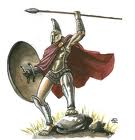
When Spartan men went to war, their wives (or another women of some significance) would customarily present them with their shield and say: "With this, or upon this" (Ἢ τὰν ἢ ἐπὶ τᾶς, Èi tàn èi èpì tàs), meaning that true Spartans could only return to Sparta either victorious (with their shield in hand) or dead (carried upon it). If a Spartan hoplite were to return to Sparta alive and without his shield, it was assumed that he threw his shield at the enemy in an effort to flee; an act punishable by death or banishment. A soldier losing his helmet, breastplate or greaves (leg armour) was not similarly punished, as these items were personal pieces of armour designed to protect one man, whereas the shield not only protected the individual soldier but in the tightly packed Spartan phalanx was also instrumental in protecting the soldier to his left from harm. Thus the shield was symbolic of the individual soldier's subordination to his unit, his integral part in its success, and his solemn responsibility to his comrades in arms — messmates and friends, often close blood relations.
The Battle of Thermopylae (pronounced /θərˈmɒpɨliː/, thər-MOP-i-lee; Greek: Θερμοπύλαι) was fought between an alliance of Greek city-states, led by Sparta, and the Persian Empire of Xerxes I over the course of three days, during the second Persian invasion of Greece. It took place simultaneously with the naval battle at Artemisium, in August or September 480 BC, at the pass of Thermopylae ('The Hot Gates'). The Persian invasion was a delayed response to the defeat of the first Persian invasion of Greece, which had been ended by the Athenian victory at the Battle of Marathon. Xerxes had amassed a huge army and navy, and set out to conquer all of Greece. The Athenian general Themistocles had proposed that the Allied Greeks block the advance of the Persian army at the pass of Thermopylae, and simultaneously block the Persian navy at the Straits of Artemisium.
An Allied force of approximately 7,000 men thus marched north to block the pass in the summer of 480 BC. The Persian army, alleged by the ancient sources to have numbered in the millions, arrived at the pass in late August or early September. Vastly outnumbered, the Greeks held off the Persians for seven days in total (including three of battle), before the rear-guard was annihilated in one of history's most famous last stands. During two full days of battle, the small force led by King Leonidas I of Sparta blocked the only road by which the massive Persian army could pass. After the second day of battle, a local resident named Ephialtes betrayed the Greeks by revealing a small path that led behind the Greek lines. Aware that his force was being outflanked, Leonidas dismissed the bulk of the Greek army, and remained to guard the rear with 300 Spartans, 700 Thespians, 400 Thebans and perhaps a few hundred others, the vast majority of whom were killed.
After this engagement, the Allied navy at Artemisium received news of the defeat at Thermopylae. Since their strategy required both Thermopylae and Artemisium to be held, and given their losses, the Allied navy decided to withdraw to Salamis. The Persians overran Boeotia and then captured the evacuated Athens. However, seeking a decisive victory over the Persian fleet, the Allied Greek fleet attacked and defeated the invaders at the Battle of Salamis in late 480 BC. Fearing to be trapped in Europe, Xerxes withdrew with much of his army to Asia, leaving Mardonius to complete the conquest of Greece. The following year, however, saw an Allied army decisively defeat the Persians at the Battle of Plataea, thereby ending the Persian invasion.
Both ancient and modern writers have used the Battle of Thermopylae as an example of the power of a patriotic army of freemen defending native soil. The performance of the defenders at the battle of Thermopylae is also used as an example of the advantages of training, equipment, and good use of terrain as force multipliers and has become a symbol of courage against overwhelming odds.